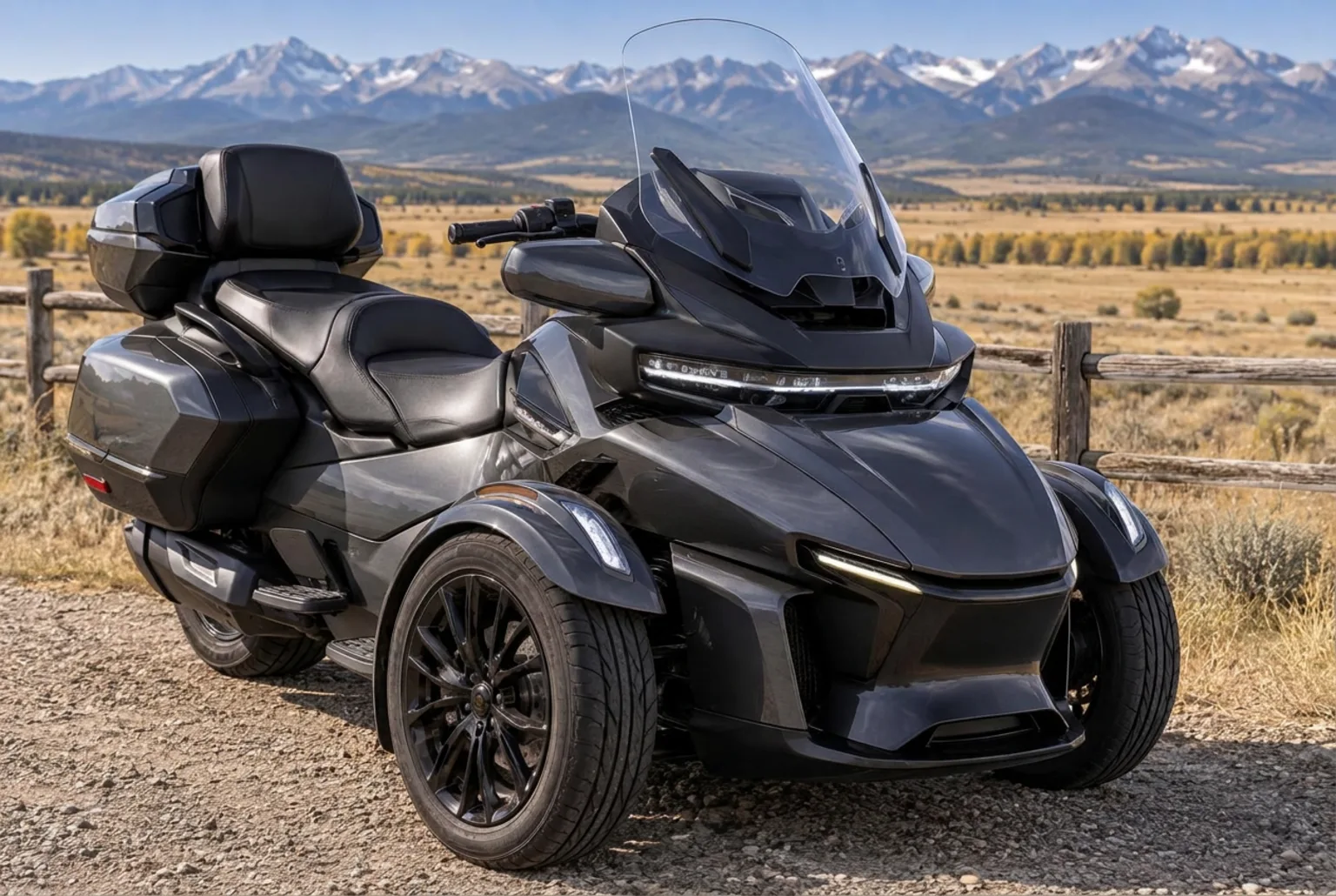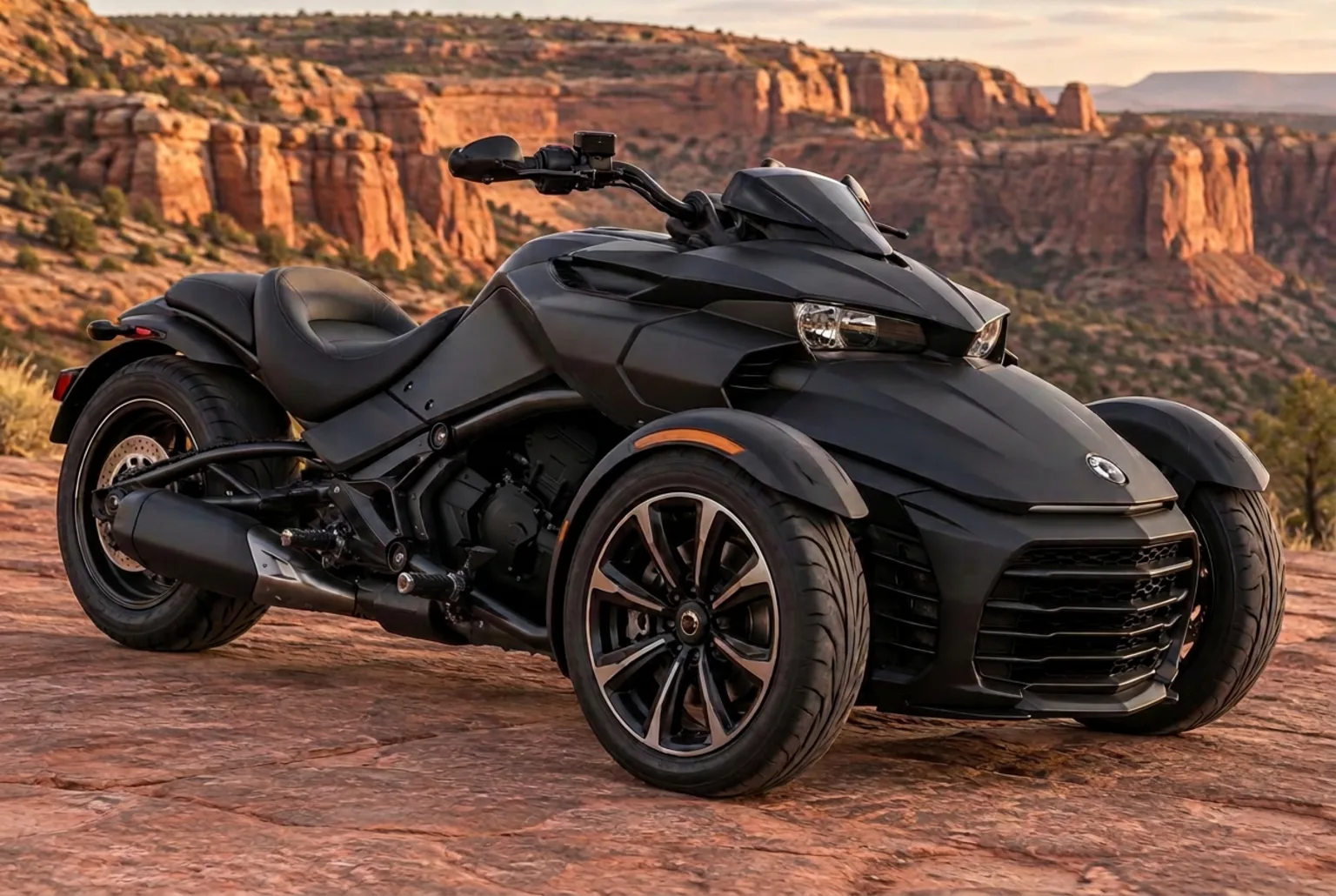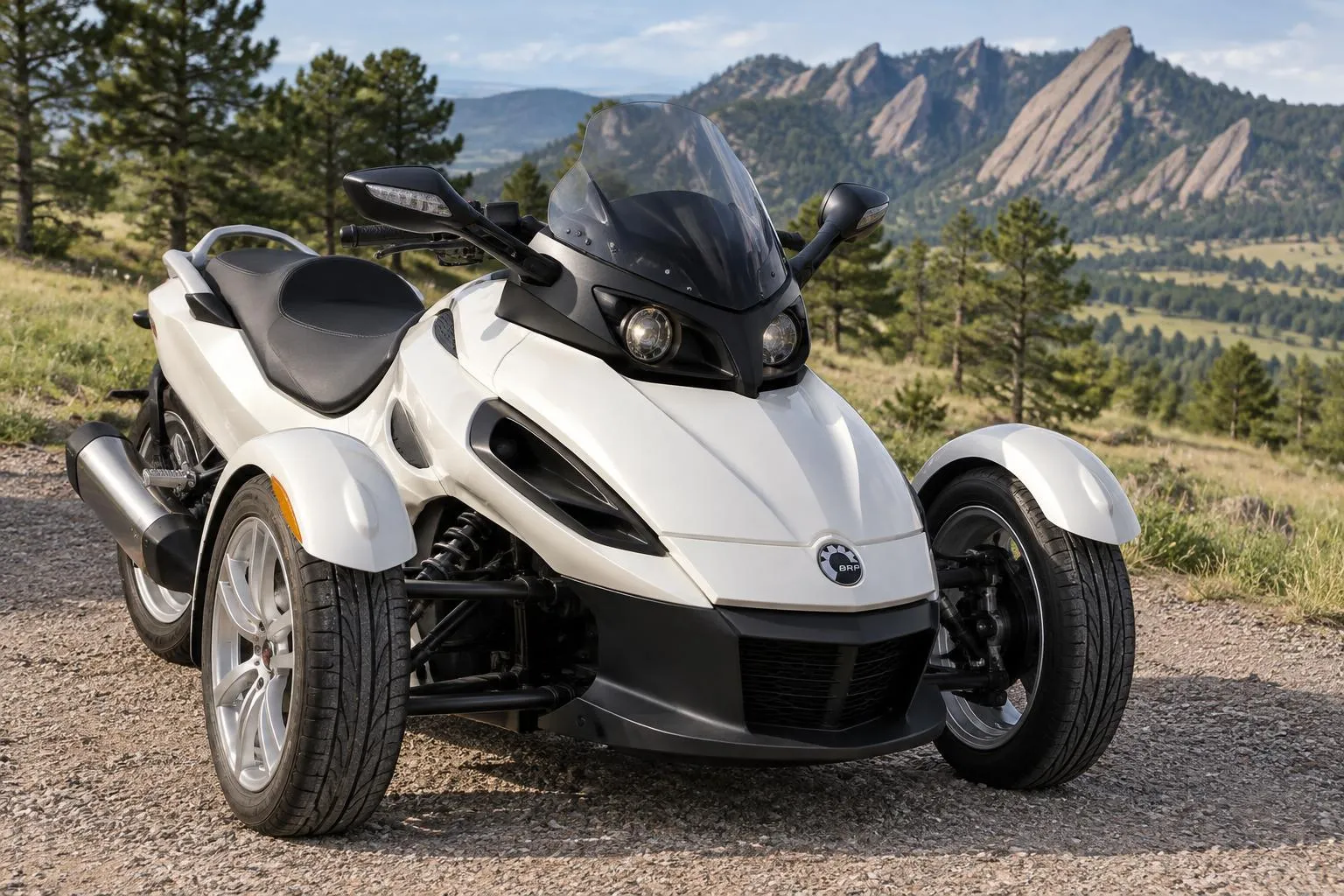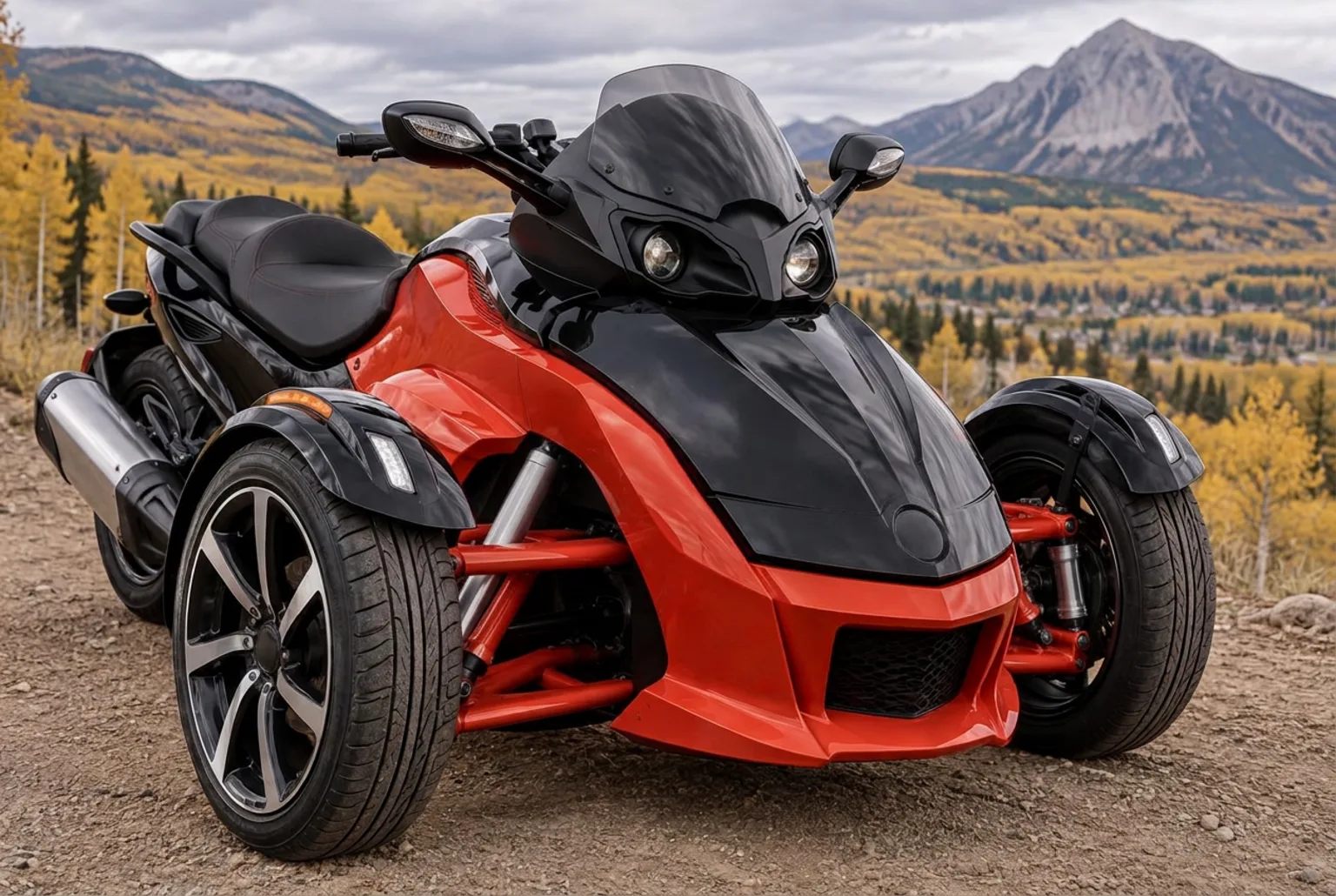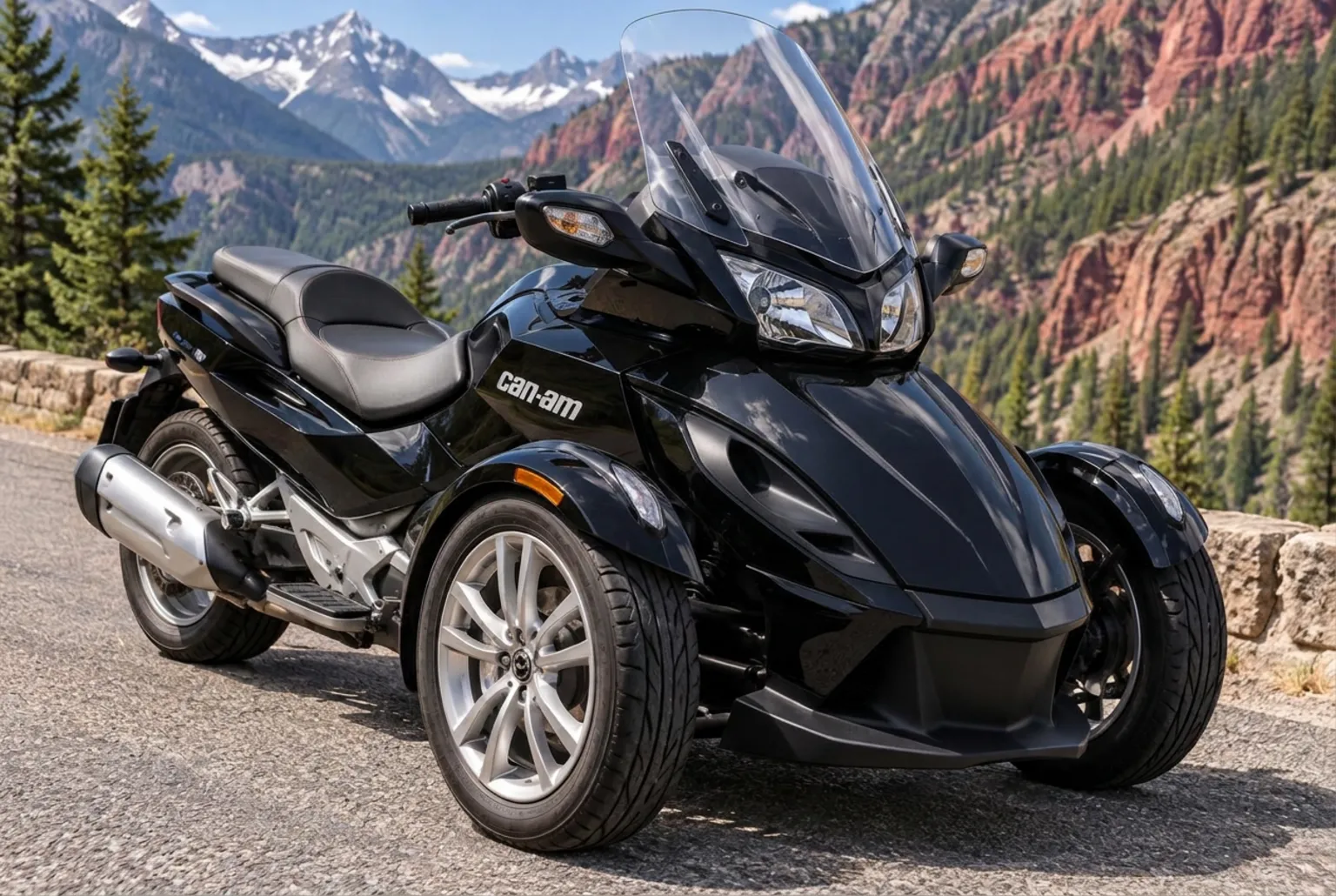
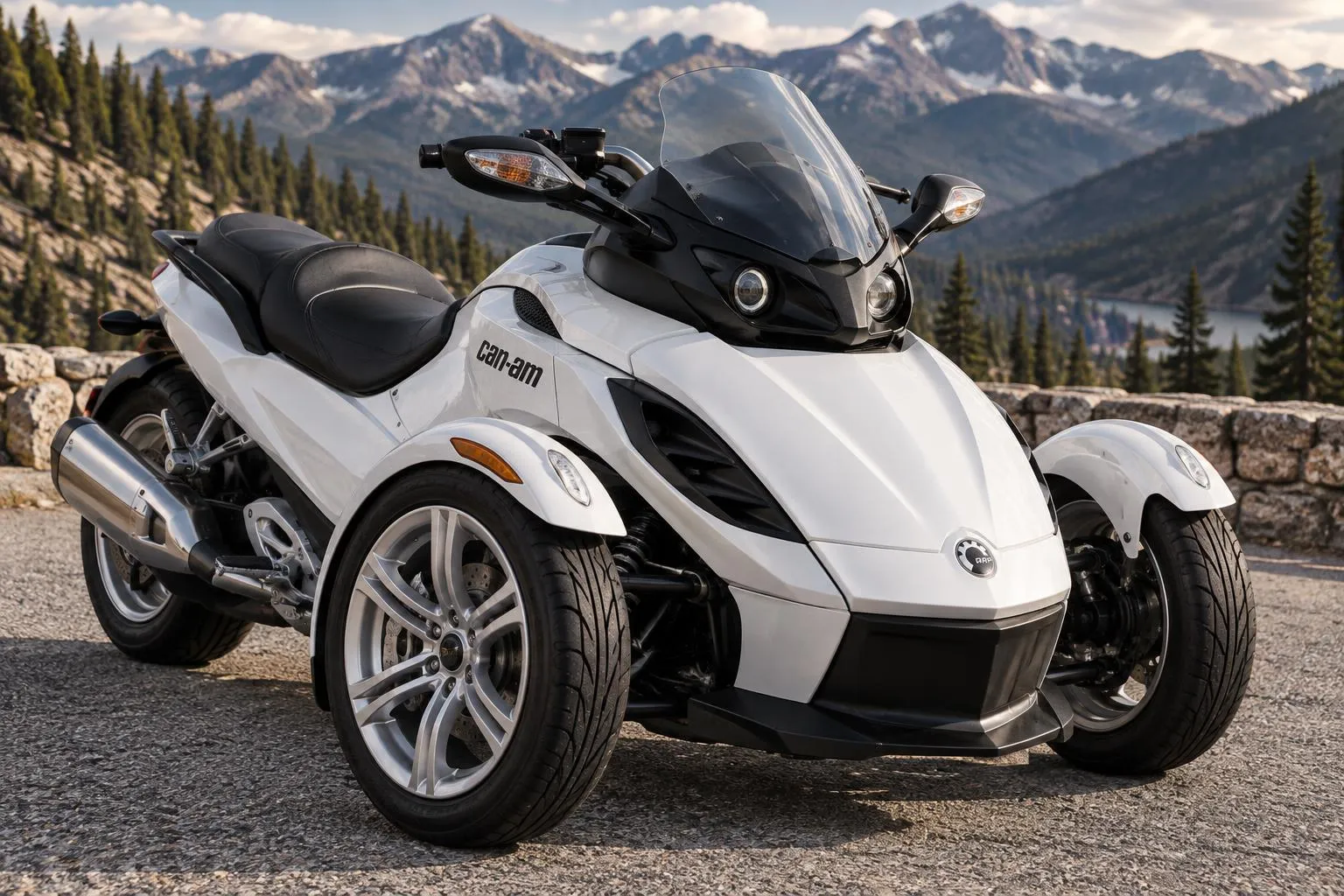
Can-Am Spyder RS Service & Repair
The Spyder RS carries forward the sport-roadster side of the early Spyder family. Its sport-oriented bodywork and lighter visual style make it easy to recognize beside the touring-focused models. If you ride an RS, Mighty Ride Moto is a place to bring it for service.
The original sport-oriented Spyder, refined over seven model years.
The Can-Am Spyder RS carried forward the character of BRP's original roadster: two wheels in front, one driven wheel behind, an exposed and athletic appearance, and a riding position that emphasized control and engagement rather than long-distance touring comfort.
The RS name appears in BRP's factory guides from the 2010 model year, and the model continued the sporting direction established by the earlier Spyder GS. Unlike the larger RT touring models, the RS retained a compact, minimalist approach, with little wind protection, limited luggage space, and a forward-leaning riding position.
The RS remained in the lineup through 2016, sharing its basic platform with the better-equipped RS-S.
The RS in the Spyder family
The RS occupies an important place in Can-Am history.
The original Spyder GS appeared for the 2008 model year. The RS became the successor to that early sporting platform, retaining the distinctive riding experience that introduced the Spyder concept.
The arrival of the RT in 2010 established a separate touring direction, while the ST, introduced for 2013, offered a more upright sport-touring alternative.
The RS remained the straightforward sport model throughout these changes. It appealed to riders who valued the early Spyder's relatively uncluttered design and more motorcycle-like riding position.
Although the RS and RS-S shared much of their engineering, they were not identical equipment packages. The RS-S gained additional appearance, instrumentation, suspension, and convenience features over its production life.
Two eras of the Spyder RS
The RS is best understood through two distinct periods.
2010–2012: The original sporting platform
The first three RS model years retained the fundamental architecture and riding character of the earlier GS.
These machines used the liquid-cooled 998 cc Rotax V-twin, a five-speed transmission with reverse, and the established Spyder layout of two independently suspended front wheels and a single belt-driven rear wheel.
The rider sat relatively high, with the handlebars positioned for a forward-reaching posture.
Manual-shift SM5 and electronically shifted SE5 versions were offered, although availability could vary by model year, color, and equipment package.
The standard RS was the simpler choice in the lineup. The RS-S provided additional styling and equipment without changing the fundamental sporting identity of the machine.
2013–2016: Revised chassis and equipment
The 2013 model year marked the major development boundary for the RS.
BRP introduced a revised chassis and updated front suspension, along with larger 15-inch front wheels and Brembo braking components.
These changes make 2013 a particularly important distinction when comparing used RS models.
The later machines retained the 998 cc V-twin and five-speed transmission architecture, but their chassis, brakes, front wheel equipment, and selected service arrangements differ from the earlier generation.
The RS continued alongside the RS-S and ST through the 2016 model year.
Year-by-year development
2010 — The RS in the factory guides
The 2010 operator's guide uses the RS model name. That same year, the touring-oriented RT joined the lineup.
The base RS offered the established V-twin sporting platform, with the five-speed manual transmission and an optional SE5 electronically shifted transmission.
The RS-S was also documented for this model year, including a distinctive Pearl White special-edition package. The two models shared their basic architecture but offered different equipment and presentation.
For used buyers, 2010 also falls within several important early-generation service and recall histories, particularly steering and selected SE5 clutch components.
2011 — Continuing the original RS formula
The RS retained its sporting layout and 998 cc engine.
BRP's model information identifies the standard RS alongside the RS-S, with different equipment packages and transmission availability.
Published 2011 RS-family specifications listed 106 horsepower at 8,500 rpm.
The RS continued to emphasize a relatively direct riding experience, without the extensive wind protection and touring equipment associated with the RT.
2012 — The final year of the early platform
The 2012 RS remained closely related to the preceding models.
Factory specifications retained the 998 cc V-twin, five-speed transmission options, and 106-horsepower rating.
The RS-S gained noteworthy suspension equipment, including gas-charged FOX front shocks with preload adjustment. That distinction is useful when identifying original equipment or assessing a used RS-S, but should not be assumed to apply to the standard RS.
For the standard RS, 2012 represents the final model year before the substantial 2013 changes.
2013 — The major RS update
The 2013 RS received a revised chassis and front suspension, with 15-inch front wheels and Brembo brakes.
This is the most important dividing line in the RS's production history.
Factory documentation specifies a 998 cc V-twin, five-speed manual or electronically shifted transmission with reverse, and revised braking hardware.
The RS-S continued as the more extensively equipped sporting variant, with additional features including electronic cruise control and upgraded front suspension.
Owners and buyers should identify 2013-specific parts and service procedures rather than assuming compatibility with 2012 models.
2014 — Refinement of the revised platform
The RS continued on the revised platform introduced in 2013, with the 998 cc V-twin, SM5 or SE5 five-speed transmissions, 15-inch front wheels (Kenda KR31 165/55R15 front tires) and Brembo braking equipment.
The RS-S package added cruise control, a color gauge and sport-tuned stability control.
Factory documents for 2014 disagree on the standard RS front suspension: the operator's guide lists SACHS front shocks, while the Canadian-market specification sheet lists FOX. The two documents also give different fuel-capacity figures. Front-shock brand alone should not be used to identify a 2014 RS or to tell it apart from an RS-S. Check the market, the package features and the hardware actually fitted.
2015 — The RS alongside the newer F3
The introduction of the F3 added a new riding style to the Can-Am lineup, with a more feet-forward seating position and the 1330 cc three-cylinder engine.
The RS remained a distinctly different machine.
BRP's 2015 RS specifications listed:
- 998 cc Rotax V-twin
- 100 horsepower at 7,500 rpm
- 80 lb-ft of torque at 5,000 rpm
- Five-speed manual or semi-automatic transmission
- 29-inch seat height
- 6.6-gallon fuel capacity
- 15-inch front wheels
The RS retained its conventional sport-oriented riding position rather than adopting the F3's cruiser-like arrangement.
2016 — The final RS model year
The RS reached its final model year in 2016.
The standard RS remained the simpler sport model, while the RS-S retained additional convenience and appearance features.
BRP's 2016 brochure listed the base RS with the five-speed SM5 manual transmission. The RS-S was listed with manual or electronically shifted transmission choices.
The 2016 RS-family engine was rated at 100 horsepower and 80 lb-ft of torque.
The standard RS was not listed with electronic cruise control as standard equipment, unlike the RS-S.
With the conclusion of the RS line after 2016, the F3 became the principal sport-oriented Spyder family in BRP's lineup.
RS specifications at a glance
Specifications changed during production. The following figures describe the later RS platform, principally the documented 2015–2016 configuration.
| Specification | Later Spyder RS |
|---|---|
| Engine | Liquid-cooled Rotax V-twin |
| Displacement | 998 cc |
| Maximum rated power | 100 hp at 7,500 rpm |
| Maximum rated torque | 80 lb-ft at 5,000 rpm |
| Transmission | Five-speed SM5 manual; SE5 availability varies by year |
| Final drive | Belt |
| Seat height | 29 in (737 mm) |
| Front tires | 165/55R15 |
| Rear tire | 225/50R15 |
| Fuel capacity | 6.6 US gal (25 L), 2015–2016 brochure figure |
| Front brakes | 270 mm discs with Brembo calipers |
| Rear brake | 270 mm disc with integrated parking brake |
| Parking brake | Manual |
| Steering | Dynamic Power Steering |
| Electronic rider aids | Stability control, traction control, ABS |
These are later-model specifications, not universal figures for every RS produced from 2010 through 2016. Factory documents for the later RS give different wheelbase and storage figures depending on the document, so those numbers are left out here. Use the operator's guide for the exact model year when a dimension matters.
RS versus RS-S
The RS and RS-S are closely related, but the RS-S should not be understood as merely a different color scheme.
Depending on model year, the RS-S offered differences in front suspension, wheels, graphics, seat treatment, instrumentation, and electronic convenience features.
Later RS-S equipment included electronic cruise control, a color instrument display, and distinctive bodywork treatments.
The standard RS provided the same basic V-twin sporting concept with a simpler equipment package.
Neither designation should be used to assume that every machine has its original shocks, wheels, or transmission. Aftermarket modifications are common enough that the installed equipment should be inspected.
Riding character and ergonomics
The RS favors an active, forward-reaching position.
Compared with the RT, it offers substantially less wind protection, less luggage capacity, and a more exposed riding experience. The trade-off is a sportier riding environment that some riders prefer.
The RS and early GS also share much of their fundamental riding-position character. There is no basis for assuming the RS became significantly more upright merely because its model name changed.
The 2013 redesign altered important chassis and control components, but did not turn the RS into a touring model.
Riders accustomed to the RT or F3 should try the RS seating position before purchasing one. Handlebar reach, foot placement, passenger accommodations, and the relatively limited wind protection may matter more in everyday use than engine specifications.
Maintenance and service considerations
The RS is now an older motorcycle platform, making documented maintenance history particularly important.
Even a low-mileage example can need substantial age-related service.
Engine oil and filters
The SM5 and SE5 transmissions do not use identical filter arrangements.
SE5 servicing includes the hydraulic control module/transmission filter where specified by the factory procedure.
Oil capacity and service requirements must be taken from the correct model-year and transmission guide.
For early machines, revised filter requirements also affected factory maintenance schedules. Service records should identify the actual filters used rather than merely state that an oil change was completed.
Valve-clearance service
The 998 cc V-twin has scheduled valve-clearance inspection requirements.
For 2014–2016 machines, factory maintenance information places the normal valve-clearance service at 22,500 km (approximately 14,000 miles) or two years, with additional considerations for frequent high-rpm operation.
The applicable schedule should be confirmed for the individual model year.
Brake fluid and other time-based maintenance
Time matters as much as mileage on an aging RS.
Brake fluid, coolant, ignition components, hoses, and other service items may require attention even when the odometer shows limited use.
A vehicle that has spent years in storage deserves a different assessment from one that has been regularly ridden and maintained.
Throttle and electronic systems
Factory service information includes guidance for certain throttle-body and electronic throttle actuator issues on later RS models.
A throttle-control complaint does not automatically justify replacing the complete throttle-body assembly.
Correct diagnosis, applicable service procedures, and the vehicle's exact configuration should determine the repair.
Recalls and factory service history
Several factory campaigns and service issues are relevant to the RS family. Applicability depends on production date, model configuration, and VIN.
Dynamic Power Steering
Early RS models fall within the history of BRP's Dynamic Power Steering campaigns.
The original steering-software action and later steering-unit replacement program should not be treated as the same repair.
A record showing that an early software update was completed does not necessarily establish that every subsequent applicable steering remedy was performed.
2010 SE5 centrifugal clutch
Certain 2010 RS models with the SE5 transmission were included in a centrifugal-clutch campaign.
The affected population is restricted by model and serial information. It should not be described as applying to every 2010 RS or to manual-transmission machines.
Fuel-system campaigns
Early RS models may be affected by fuel-cap and fuel-vapor vent-hose campaigns.
The relevant service history should identify whether the applicable final remedy was completed.
Later service bulletins
Factory communications for later RS model years include procedures addressing selected electrical, key-recognition, throttle, and fuel-system symptoms.
These are not necessarily recalls, and their existence does not establish that every RS will develop the condition.
Where a symptom is present, the appropriate bulletin may help guide diagnosis and repair.
For recall status, check the individual VIN. Model-year summaries are not substitutes for an official vehicle-specific lookup.
What to inspect when buying a used RS
A well-maintained RS can be an appealing choice for someone who prefers the original sporting character of the Spyder. But condition, equipment, and maintenance records matter more than the model name alone.
Pay particular attention to:
- Service history: Look for dated records covering oil, applicable filters, valve inspections, brake fluid, and coolant.
- Transmission operation: Confirm proper manual-clutch or SE5 shifting behavior, as appropriate.
- Steering and suspension: Examine steering response, front shocks, suspension wear, and evidence of previous repairs.
- Brake condition: Inspect service history and brake operation, including the parking brake.
- Recall history: Verify campaign completion by VIN, particularly on earlier production models.
- Throttle behavior: Investigate warning lights, abnormal throttle response, or slow throttle return.
- Original equipment: Determine whether shocks, wheels, handlebars, and other major components have been modified.
- Storage history: Evaluate tires, fluids, battery condition, hoses, and other age-sensitive components.
For 2012 and 2013 machines, pay special attention to the platform change. These model years are not identical in chassis, braking hardware, wheel dimensions, or certain service-access arrangements.
Is the RS the right Spyder?
The RS makes the most sense for riders who want the early Spyder's sporty appearance and forward-reaching ergonomics without the additional bulk and touring equipment of the RT.
It is less well suited to riders whose priorities are substantial weather protection, integrated luggage, or a relaxed touring posture.
The RS-S offers a related riding experience with additional factory equipment, while the ST provides a more upright sport-touring direction. The F3 offers a fundamentally different feet-forward arrangement.
The RS remains a distinctive part of Can-Am's history: a relatively uncomplicated sporting roadster that preserved the character of the original Spyder through 2016.
Owner resources
Call or Text Mighty Ride Moto
Need service for your RS? Call or text us.