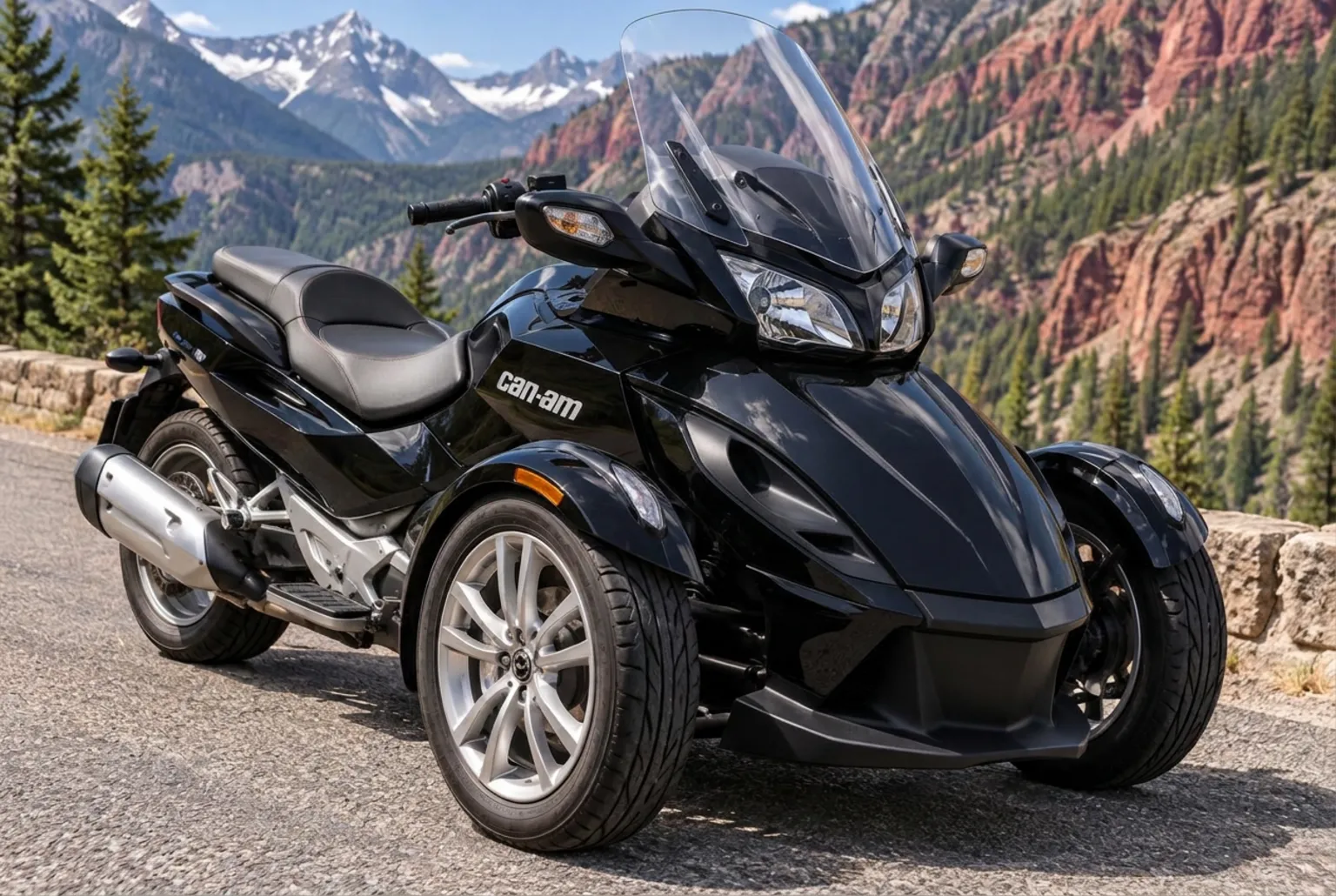
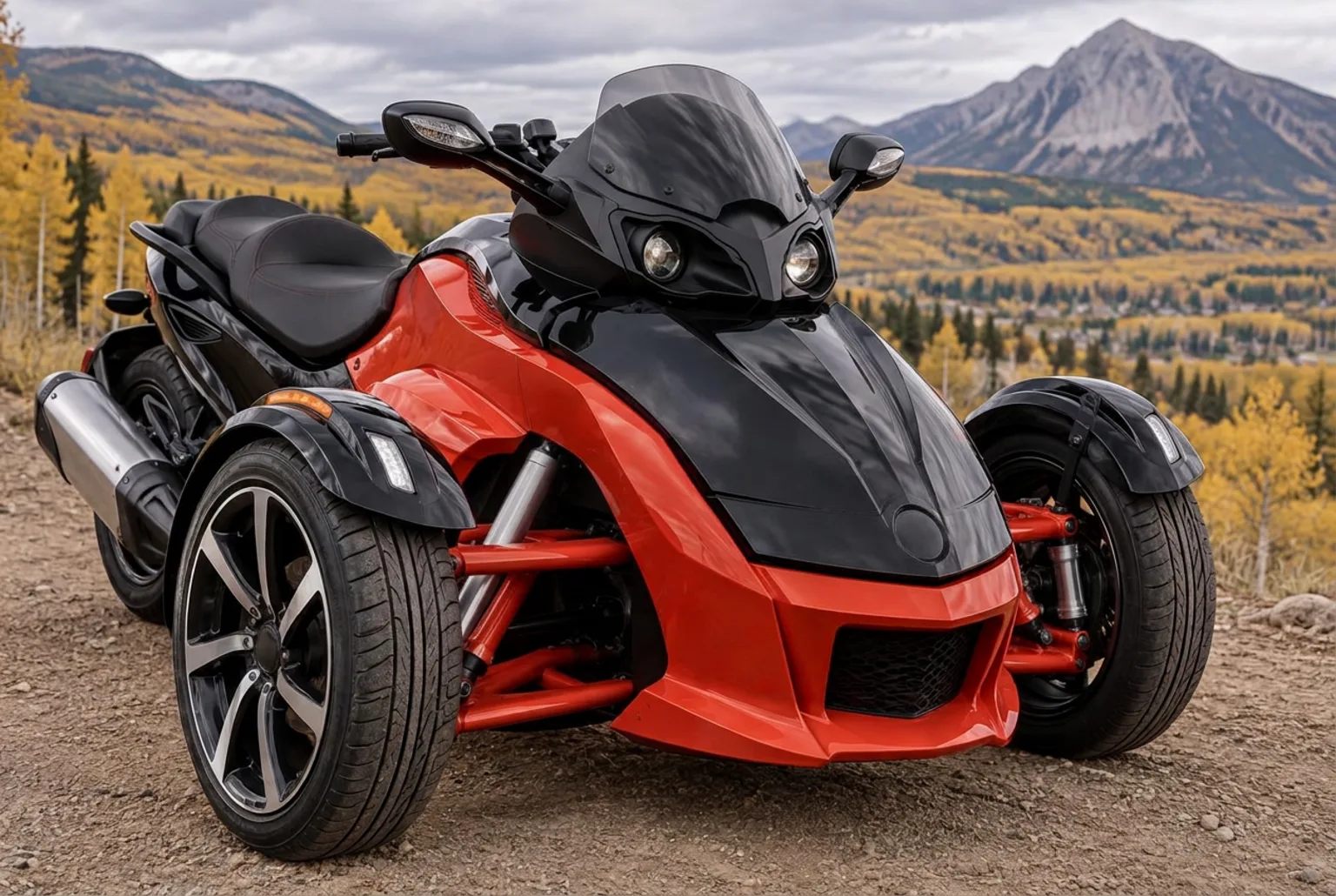
Can-Am Spyder RS-S Service & Repair
The RS-S is part of the sport-focused RS line, with its own trim and appearance. RS-S owners know their Spyder when they see it; Mighty Ride Moto knows the model too. We service and repair RS-S Spyders as part of the full Can-Am Spyder family.
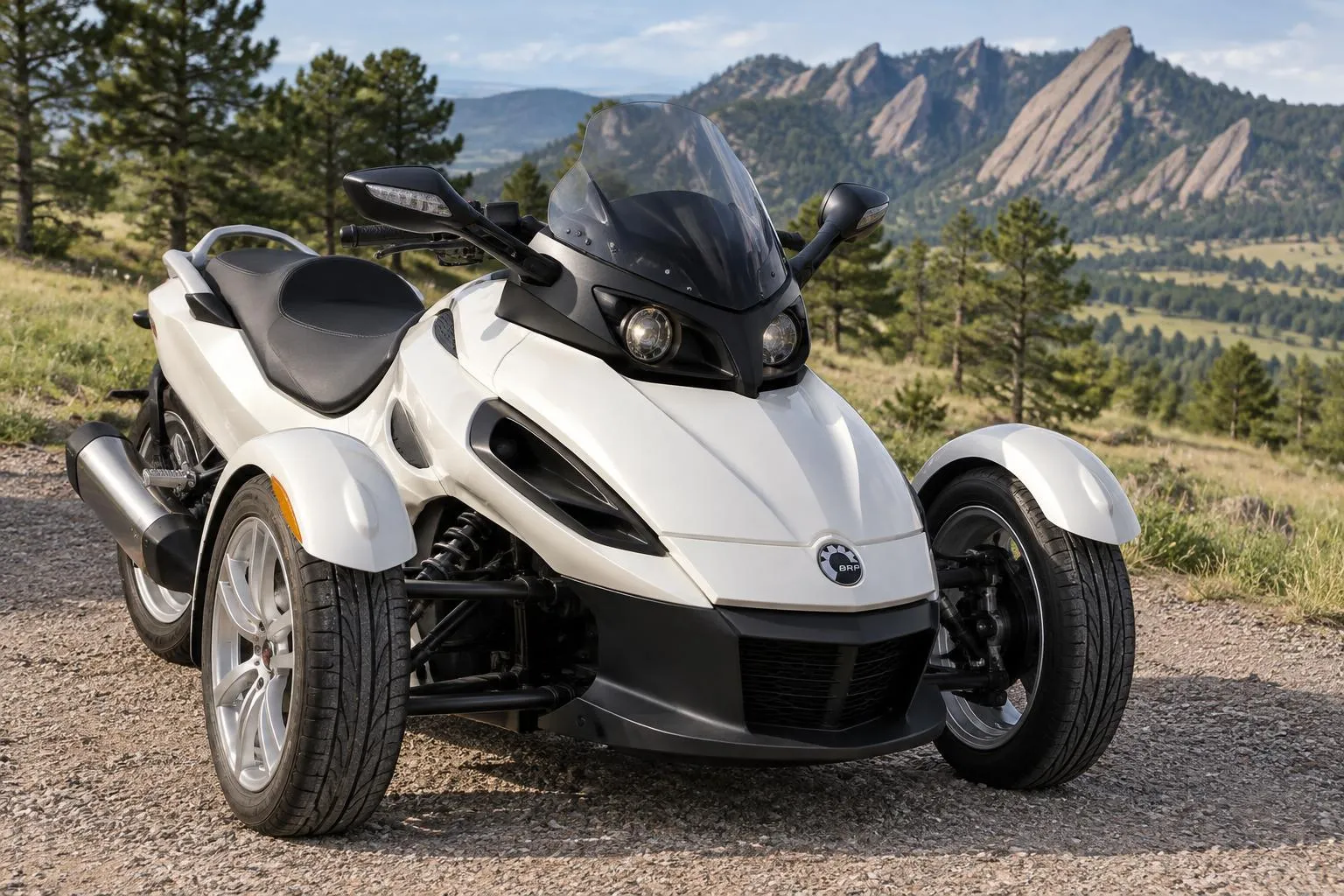
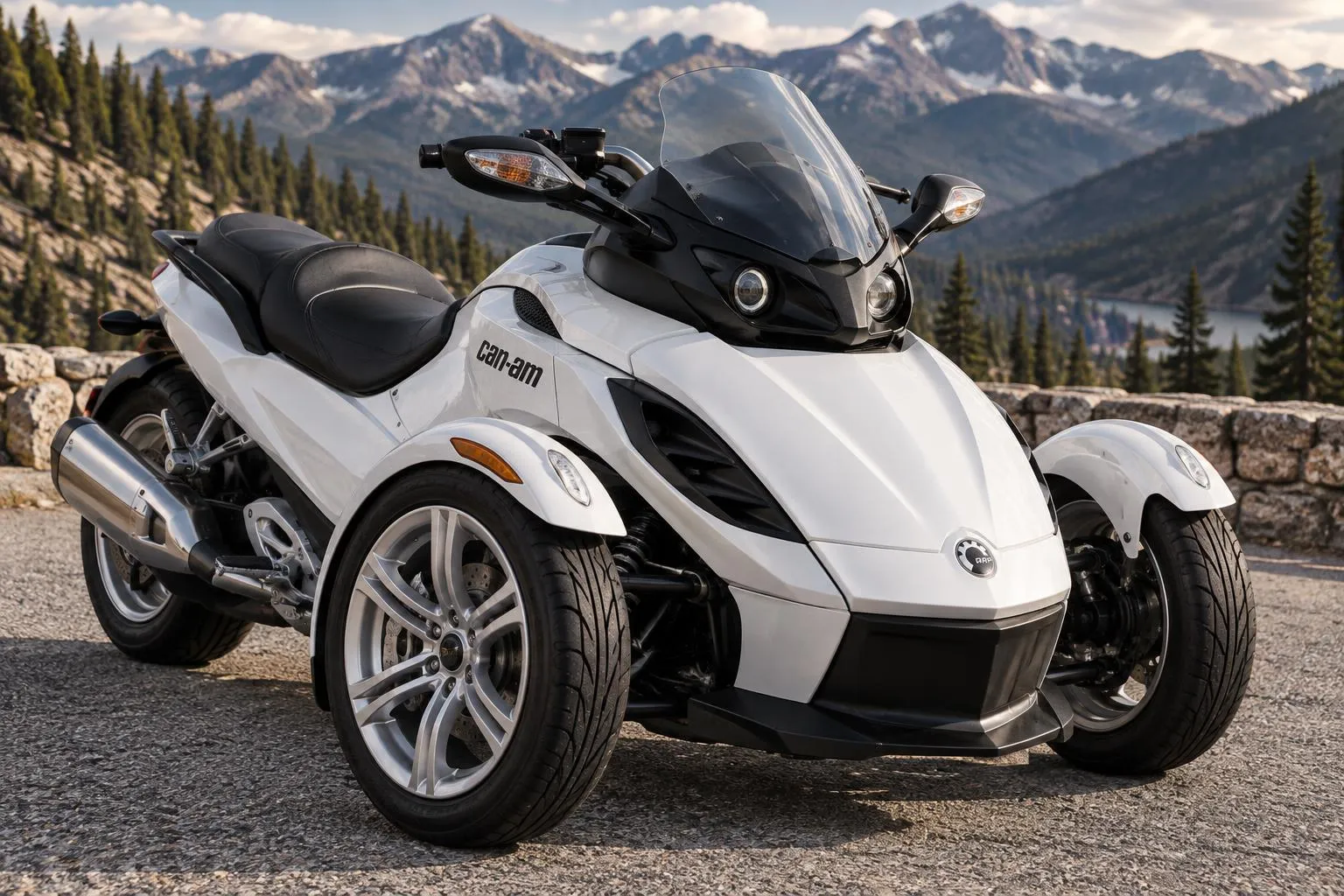
The Spyder RS-S is the better-equipped version of the sport-oriented RS. It shares the RS layout: two front wheels, one belt-driven rear wheel, the 998 cc Rotax V-twin and a forward-reaching sport riding position. What sets it apart is the factory package around that platform. Depending on the year, that meant wheels, finishes, graphics, seat treatment, front suspension, instrumentation and electronic cruise control.
The RS-S was offered in every RS model year from 2010 through 2016. Over that time its package changed a lot, so the year matters as much as the badge when identifying, servicing or buying one.
Where the RS-S fits
The sport-oriented Spyder line began with the original GS in 2008. Later factory guides use the RS name, and the RS-S appears alongside the standard RS from 2010. The RT (from 2010) became the touring branch and the ST (from 2013) the sport-touring one. The RS and RS-S stayed the sport models.
The RS-S is not a different engine or a separate chassis. Both models use the same 998 cc V-twin, and the factory lists the same power rating for both in each documented year. The RS-S differences are equipment and finish, and some of that equipment, especially front suspension and cruise control, affects how the machine rides and how it should be serviced.
Mechanical change vs. package difference. The biggest mechanical change in RS-S history came in 2013, when the whole RS platform was revised. Most other year-to-year differences are package changes: what the RS-S added on top of the RS that year.
Two platforms: 2010–2012 and 2013–2016
2010–2012: The original platform
The early RS-S uses the original RS chassis with 14-inch front wheels (MC165/65R14 front tires in the factory guides) and the brake hardware of that period. Both the SM5 five-speed manual and the SE5 electronically shifted five-speed were offered, each with reverse. The SM5 uses a hydraulically operated wet clutch. The SE5 combines a centrifugal clutch with electronically controlled clutch operation. It is not a continuously variable transmission.
2013–2016: The revised platform
For 2013 the RS family received revised chassis geometry, altered suspension calibration and handlebars one inch higher than the preceding RS. Front wheels grew to 15 inches (165/55R15 front tires), and braking moved to 270 mm discs with Brembo calipers. Electronic throttle control appears in the 2013 guide. Cruise control became standard on the RS-S.
These changes make 2012 and 2013 machines quite different in brakes, wheels, tires, controls and some service access. Parts and procedures for one should not be assumed to fit the other.
Year by year
2010
The 2010 RS-S was a Pearl White special edition. It was equipped with the SE5 transmission, a rolling travel bag, custom wheels and a different seat treatment. The standard RS that year came with the SM5 manual, with the SE5 optional.
The 2010 RS guide lists a 998 cc liquid-cooled 60-degree V-twin (DOHC, eight valves), 14-inch front tires, a 737 mm seat height, a 1,727 mm wheelbase and 44 L of front storage with a 16 kg maximum load. The 2010 package differs from later RS-S packages, so don't assume a 2010 RS-S has the suspension or cruise control of later years.
2011
The RS-S package for 2011 centered on wheels, finishes, graphics and a stitched seat. Both SM5 and SE5 appear in the RS-S listing. The 2011 specification sheet rates the RS and RS-S at 106 hp (79 kW) at 8,500 rpm.
A road test of the 2011 RS-S reported revised rubber mounting, a second linkage rod and a revised hood latch for that year.
2012
For 2012 the RS-S package added gas-charged FOX front shocks with preload adjustment. The factory guide shows the difference: the standard RS uses cam-type preload adjustment, while the RS-S uses threaded preload rings. The rated output remained 106 hp at 8,500 rpm, with SM5 and SE5 both offered.
2012 was the last year of the original platform. The battery sits behind the left rear side panel, unlike the 2013 layout.
2013
The revised platform arrived. The 2013 RS-S added electronic cruise control, revised front fenders and preload-adjustable FOX front shocks to the RS. BRP's launch information rated the 2013 engine at 100 hp at 7,500 rpm. The guide lists a 12.2:1 compression ratio, Kenda KR31 165/55R15 front tires, a Kenda KR21A 225/50R15 rear tire, 270 mm front discs with radially mounted Brembo calipers and a 270 mm rear disc with a single-piston floating caliper and integrated parking brake.
The battery moved behind an access panel inside the front storage compartment.
2014
The 2014 RS-S continued on the revised platform with SM5 or SE5. The Canadian-market specification sheet lists cruise control, a color gauge and sport-tuned stability control for the RS-S package. Factory documents disagree about the standard RS front shocks that year, so a 2014 RS and RS-S should be told apart by their listed package features and the hardware actually fitted, not by shock brand alone.
2015
For 2015 the RS-S added cruise control, the color gauge, revised fenders and S appearance details to the RS. A 2015 RS-S Special Series was also offered: an appearance package with special wheels, a three-tone seat and distinctive colors and graphics. Its exact transmission and color combinations aren't confirmed, and shouldn't be assumed from the regular RS-S listing.
The 2015 RS specifications list 100 hp (74.5 kW) at 7,500 rpm, 80 lb-ft (108 Nm) at 5,000 rpm, a 737 mm seat height, 25 L of fuel and 136 mm front and 152 mm rear suspension travel.
2016
2016 was the final year for both the RS and RS-S. The brochure lists the standard RS with the SM5 manual only, while the RS-S offered SM5 or SE5 and kept electronic cruise control, the color gauge and sport trim details. Both kept the 998 cc engine and a manually operated parking brake.
From 2016 onward, the F3 continued as the sport-oriented Spyder line.
2016 RS-S specifications
Specifications changed over production. The figures below are from the 2016 RS/RS-S brochure and describe that year only. They are not universal figures for every RS-S from 2010 to 2016.
| Item | 2016 RS-S |
|---|---|
| Engine | 998 cc liquid-cooled Rotax V-twin, fuel injection, electronic throttle control |
| Rated power | 100 hp (74.5 kW) at 7,500 rpm |
| Rated torque | 80 lb-ft (108 N·m) at 5,000 rpm |
| Transmission | SM5 five-speed manual or SE5 five-speed semi-automatic, both with reverse |
| Front suspension | Gas-charged FOX PODIUM shocks, 5.1 in (129 mm) travel |
| Rear suspension | SACHS shock, 6 in (152 mm) travel |
| Front brakes | 270 mm discs, Brembo four-piston fixed calipers |
| Rear brake | 270 mm disc, one-piston floating caliper, integrated parking brake |
| Parking brake | Manual |
| Front tires | MC165/55R15 55H |
| Rear tire | MC225/50R15 76H |
| Fuel capacity | 6.6 US gal (25 L) |
| Seat height | 29 in (737 mm) |
| Dry weight | 798 lb (362 kg), brochure figure |
| Steering and controls | Dynamic Power Steering, stability control, traction control, ABS |
| Cruise control | Electronic, standard on RS-S |
| Wind protection | Sport windshield |
Factory documents for the later RS family give different wheelbase and storage figures depending on the document, so those numbers are left out here. Use the operator's guide for the exact model year when a dimension matters.
RS-S vs. RS
| RS | RS-S | |
|---|---|---|
| Engine | 998 cc V-twin | Same engine and same listed rating |
| Transmission | SM5, SE5 optional (SM5 only listed for 2016) | 2010: SE5 special edition; 2011–2016: SM5 or SE5 |
| Front suspension | Standard RS shocks; cam-type preload (2012 guide) | FOX gas-charged, preload-adjustable with threaded rings (2012–2013 packages) |
| Cruise control | Not listed as standard (2016) | Electronic cruise control, standard from 2013 |
| Instrumentation | Standard gauge | Color gauge (2014–2016 listings) |
| Appearance | Base finishes | Distinct wheels, finishes, graphics, seat treatment and fenders by year |
| Special editions | — | 2010 Pearl White; 2015 Special Series |
Riding position, wind protection and the overall sport character are the same. The RS-S doesn't have a more powerful engine. Its advantages are equipment, convenience and finish.
The badge alone doesn't prove the equipment. Shocks, wheels and seats are often changed over the years, so check what is actually installed.
Maintenance and service
Many RS-S machines have now had long lives, and calendar time matters as much as mileage. A low odometer reading doesn't mean time-based service was done.
Oil and filters: SM5 and SE5 differ
SM5 and SE5 machines don't share the same filter work. The guides list an oil service fill of about 3.9 L with the engine filter changed on SM5, and about 4.3 L with the engine and transmission (HCM) filters changed on SE5. Always confirm the figure in the guide for the exact year. A service invoice should state which transmission was serviced and which filters were replaced.
For 2010–2012 machines, BRP's 2012 maintenance booklet allows a longer oil-service interval only with the revised higher-capacity filters, and it excludes California-registered vehicles. Keep that booklet with the original guide.
The 2015 RS schedule lists an initial 1,000 km service, oil and filter every 7,500 km, and minimum annual maintenance for machines that cover less distance. It keeps SM5 clutch-fluid work separate from SE5 HCM-filter work.
Valve clearance, spark plugs and brake fluid
For 2014–2016, the factory schedules place valve-clearance service, spark plugs and brake-fluid replacement at 22,500 km or 2 years. Valve service comes earlier for machines used frequently at high rpm.
Fuel-system items
The 2015 and 2016 guides list differently named fuel-system tasks at different intervals: the 2016 guide lists a fuel-vapor filter at 30,000 km or 5 years and the fuel filter at 45,000 km. These are separate tasks. Follow the guide for the exact year.
Other schedule entries
The 2014–2016 guides list air-filter and coolant entries more than once, at different intervals. We don't reduce them to a single schedule. Use the exact-year guide and the machine's condition.
Battery access
The battery moved between 2012 and 2013. On 2012 machines it sits behind the left rear side panel; from 2013 it is behind a panel inside the front storage compartment. A generic Spyder battery video may show the wrong layout.
Throttle
A factory procedure lets a technician replace only the electric throttle actuator on 2013–2015 RS/RS-S models (and on 2016 per its model table) instead of the whole throttle body. It's an alternative repair, not a cure for every throttle fault, so diagnosis comes first.
Recalls and factory service history
Campaigns apply by model year, model code, serial number and sometimes transmission. Model-year coverage is only a reason to check. It doesn't prove a machine is affected, and one invoice doesn't prove every applicable action was completed. Check the individual VIN.
Safety recalls
- Steering (2010 RS/RS-S): the early Dynamic Power Steering history includes an unexpected-steering-effort campaign for units built before August 19, 2010. The original software action and later steering work are different repairs.
- SE5 clutch (2010 SE5 only): certain 2010 SE5 machines were covered by a recall for a clutch that may remain engaged. It doesn't apply to SM5 machines or to every 2010 RS-S; the model code and serial must match.
- Fuel cap sealing (2010–2012 RS series): the campaign lists all model and serial numbers in that series and years.
- Fuel-vapor canister vent hose (2010, selected serials): inspection alone may be enough if the correct preformed hose is installed; otherwise the hose is replaced.
Service campaigns and bulletins specific to the RS-S
- 2013 RS-S: stabilizer bar link rods, listed serials only.
- 2014 RS-S SE5: front fuse box covers and ECM software update, for specified model codes and serials.
- 2016 RS-S: relay terminals at the fuse boxes, campaign-listed vehicles only.
Other RS-family factory actions
- 2013: wheel alignment campaign (listed serials); fuse-box sealing and ECM update, with a belt-guard screw operation on RS; SE5 warm-engine shifting guidance; P0217 heat-soak diagnostic guidance; air scoop retrofit kit for RS/ST.
- 2013–2015 (non-CARB): revised EVAP purge-valve line.
- 2014: ignition key and flasher campaign 2014-0010, which supersedes the earlier 2014-0003 instructions; gas cap campaign for unregistered vehicles only.
- 2014–2015: intermittent D.E.S.S. ERROR / no-start guidance.
- 2015 (CARB models): fuel pressure regulator noise. Diagnose it before assuming the pump has failed.
- 2015–2016: throttle grip assemblies with higher friction, serial eligibility through campaign records.
Bulletins and factory guidance are often symptom-dependent. They help guide a repair when the symptom is present; they don't mean every RS-S will develop it.
Buying a used RS-S
- Confirm the year and platform. 2010–2012 and 2013–2016 machines differ in wheels, brakes, chassis, controls and battery access.
- Check the package against the hardware. For a 2012 or 2013 RS-S, look for the FOX preload-adjustable front shocks. On later years, confirm cruise control and the color gauge work. Ask whether major parts have been replaced.
- Transmission. Confirm proper clutch and shifting behavior for SM5 or SE5, and that service records match the transmission fitted.
- Service records. Look for dated invoices covering oil and both applicable filters, valve clearance, spark plugs, brake fluid and coolant, not just oil changes.
- Recall evidence. On 2010 machines, ask for proof of the steering, fuel-cap and vent-hose work, and on SE5 models the clutch recall. On later years, check the RS-S-specific campaigns listed above.
- Keys and electronics. On 2014–2015 machines, check both keys and the lock functions, and ask about any D.E.S.S. no-start history.
- Throttle. Investigate warning lights, unusual throttle response or slow throttle return, and ask for the diagnostic and campaign history.
- Storage history. Check tires, fluids, battery, hoses and other age-sensitive parts on a machine that has been stored.
- Passenger fit. For two-up riding, have the passenger check their reach to both handholds and footrests before buying.
Is the RS-S the right Spyder?
The RS-S suits riders who want the RS's sport character with more factory equipment: adjustable FOX front suspension in its package years, electronic cruise control from 2013 and a more finished look. Riders who want weather protection and luggage are better served by an RT. The ST offers a more upright sport-touring position, and the F3 a feet-forward cruiser position.
Mighty Ride Moto services every RS-S year. We start with the model year, transmission and the machine's service and recall history, and don't assume a part or procedure from another year applies.
Related model: the standard RS has its own page.
Owner resources
Call or Text Mighty Ride Moto
Need service for your RS-S? Call or text us.